Hurricane season electrical safety checklist
What to check before June 1, what to do when a storm is coming, how to run a generator without hurting anyone, and who to call after: FPL or an electrician.
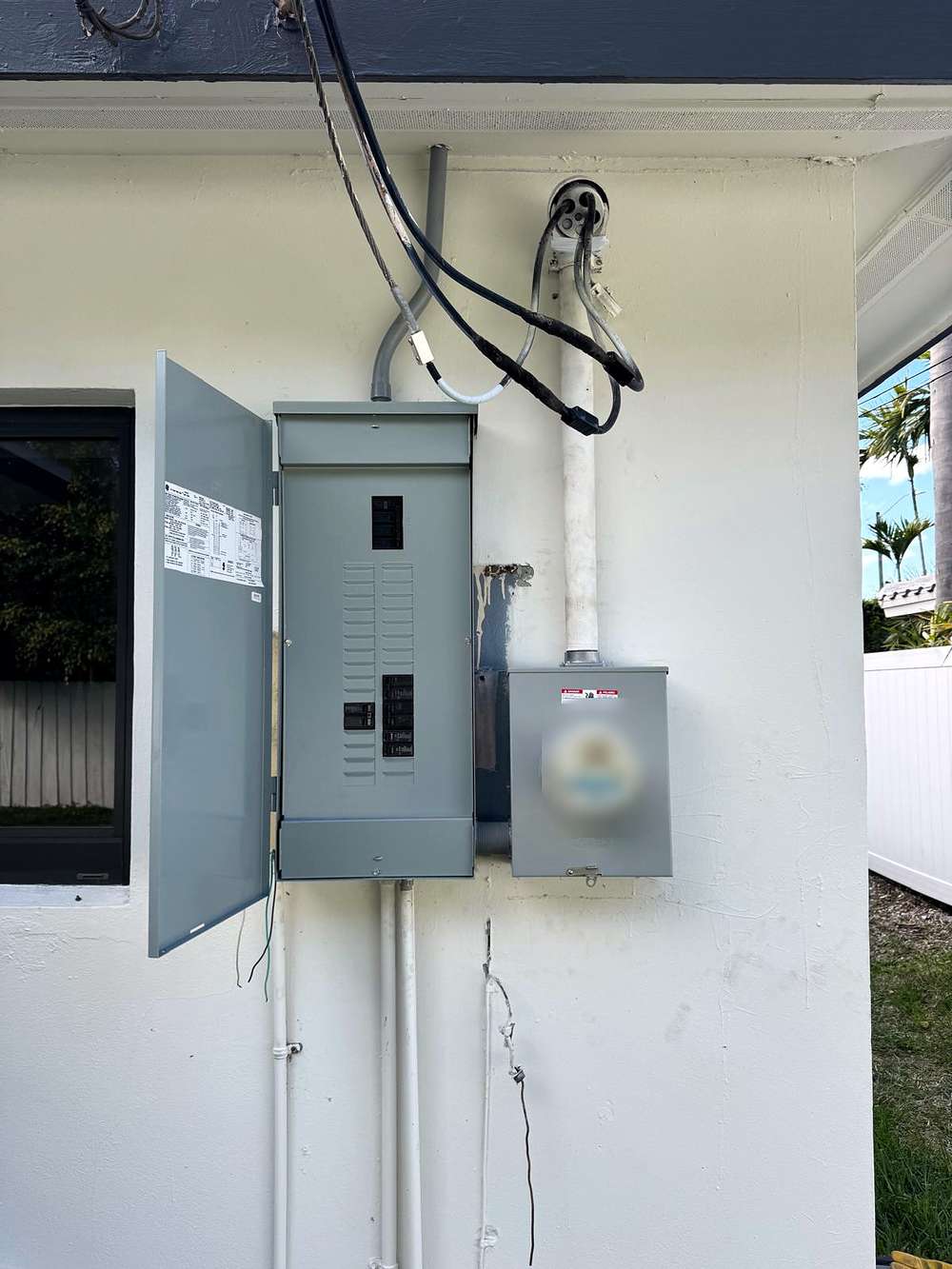
Florida hurricane season runs June 1 to November 30. Electrical prep gets less attention than shutters and supplies, yet it causes many storm injuries and fires: generators in the wrong place, cords in the wrong outlet, flooded circuits switched back on.
Before the season starts
- Find the main breaker, at the top of the panel or in a separate disconnect outside near the meter. Every adult should know how to switch it off.
- Label the panel. A clear, current directory saves time in an emergency.
- Test GFCI outlets in the kitchen, bathrooms, garage, laundry and outdoors. Press TEST to cut the power, then RESET. Replace any that will not trip or reset.
- Outdoor outlets need weatherproof in-use covers that close even with something plugged in.
- Walk the outside. Loose fixtures or outdoor lights, cracked lenses, rusted boxes and a leaning service mast (where the utility line connects) are far easier to fix in spring than after a storm.
- Plug electronics into quality surge strips, and ask a licensed electrician about surge protection at the panel.
- Stock flashlights, headlamps, lanterns and fresh batteries. No candles. They cause fires during outages.
- Install battery backed carbon monoxide alarms near sleeping areas and on every level, especially if you will run a generator.
- Never trim branches near the wire from the pole to your house. Ask your utility about trees near power lines.
- Plan generator use now. House circuits can only be powered safely from a generator through a transfer switch or panel interlock installed by a licensed electrician. Without one, plug appliances directly into the generator.
When a storm is on the way
- Charge phones, power banks, laptops and any medical devices.
- Unplug electronics you will not need, especially if you are leaving.
- Bring in outdoor cords, portable lights and anything plugged in outside.
- Follow your pool equipment manufacturer’s storm guidance. Many owners switch it off at the breaker.
- If you evacuate or expect water inside, switch off the main breaker before you leave. Only do it if you and the floor are completely dry.
During the outage
- Switch off or unplug major appliances and electronics to protect them from spikes when power returns. Leave one lamp on so you know when it does.
- Keep away from the panel if water is near it. Do not touch it or stand in water to reach it.
- Run the generator outdoors only. Never in the house, garage, shed or any enclosed space, even with the doors open. The CDC recommends at least 20 feet from doors, windows and vents. Carbon monoxide has no smell, and generator poisonings are a known danger after Florida storms.
- Never backfeed by plugging a generator into a wall outlet or dryer receptacle with a homemade cord that has a plug on each end. It can energize utility lines outside, injuring or killing line workers and neighbors, and start a fire in your house when the grid comes back.
- Use heavy duty, outdoor rated extension cords sized for the load. Do not prop doors or windows open to pass them inside.
- Let the generator cool before refueling. Gasoline on a hot engine is a fire.
- Keep it dry. Never touch it with wet hands.
After the storm
- Treat every downed line as live. Keep yourself, kids and pets away, and report it to FPL or your own utility, such as the City of Lake Worth Beach. Never drive through standing water where a line is down.
- Do not touch flooded equipment that is still connected: outlets, power strips, appliances, the panel.
- Do not reenergize water damaged circuits. Breakers, outlets, panels and wiring that were under water stay off until a licensed electrician inspects them. Manufacturers generally advise replacing submerged breakers and panels rather than drying and reusing them.
- Check the service mast, the weatherhead on top and the meter enclosure. The utility usually owns the line to your house and the meter; those three parts belong to the homeowner. If they are bent, pulled from the wall or broken, the utility will generally require a licensed electrician’s repair before reconnecting you.
- Pay attention when power returns. A burning smell, sparks, buzzing, or warm outlets and switches mean damage. Switch off that circuit or the main breaker, and call.
- Watch for partial power. Some lights dim and others too bright, or 240 volt appliances that will not run, can mean a lost leg of your service, on the utility side or in your equipment. Report it to the utility first. If their side is fine, call an electrician.
FPL or an electrician?
- The whole street is dark: report the outage to the utility.
- A line is down, a pole is damaged, or the wire to your house is sagging or torn: call the utility.
- Only your house is dark: check the main breaker. If it is on, contact the utility to rule out their side. If it trips again after a reset, leave it off and call an electrician.
- Burning smell, sparks, water in the panel, or a damaged mast or meter enclosure: call an electrician. Reef Electrical offers 24/7 emergency service.
The short version
Print this and tape it inside the panel door.
Before June 1: main breaker, panel labels, GFCIs, outdoor covers and fixtures, surge strips, flashlights and batteries, CO alarms, transfer switch or interlock.
Storm coming: charge, unplug, bring in cords, main breaker off if you evacuate or expect water, only if you are dry.
Outage: appliances off, one lamp on, generator outside and far from openings, never backfeed.
After: downed lines are live, flooded equipment stays off until inspected, check the mast and meter enclosure, utility for their side, electrician for yours.
When to call us
For a preseason look at your panel, outdoor outlets, fixtures and service mast, or for storm damage inside the house, request service or read about our electrical repairs. We are family owned, licensed and insured, all our work is guaranteed, and we offer 24/7 emergency service.