Why a home charger makes sense
The easiest way to live with an electric vehicle is to charge where you park every night. You plug in when you get home and leave in the morning with the range you need. No detours to public chargers, no waiting.
A standard outlet can do that for some drivers, slowly. For most people who drive their EV every day, the answer is a Level 2 charger on its own 240 volt circuit. That is the install we do.
Level 1 and Level 2
Level 1 uses a normal 120 volt household outlet and the cord that came with the car. It is simple and slow. It works if you drive little and park for long stretches.
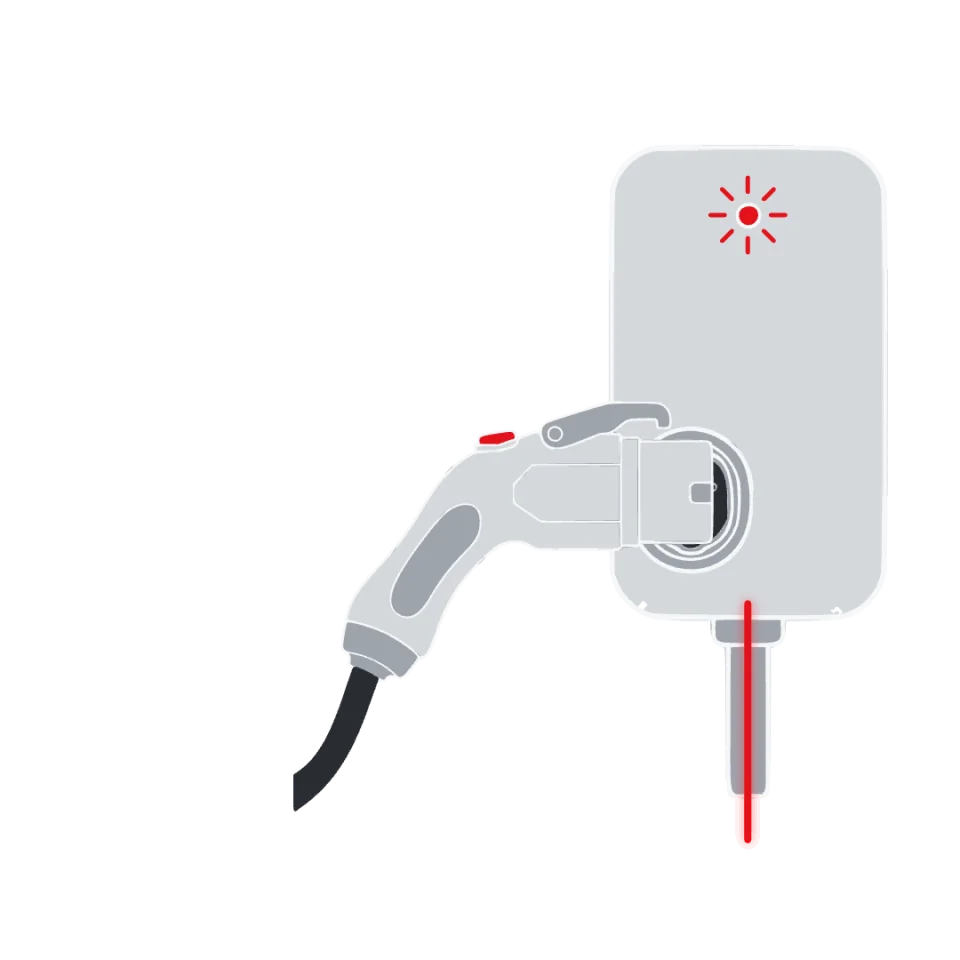
Level 2 runs on 240 volts, the same kind of circuit used by an electric range or dryer. It charges several times faster than Level 1, which is why it is the standard for home charging. The charger itself can be hardwired to the circuit or plugged into a NEMA 14-50 receptacle.
What decides the install
Your car. Every EV has an onboard charger that limits how much power it can accept. Buying a charger bigger than your car can use does not make it charge faster. We match the circuit to what makes sense for your car and the next one you might buy.
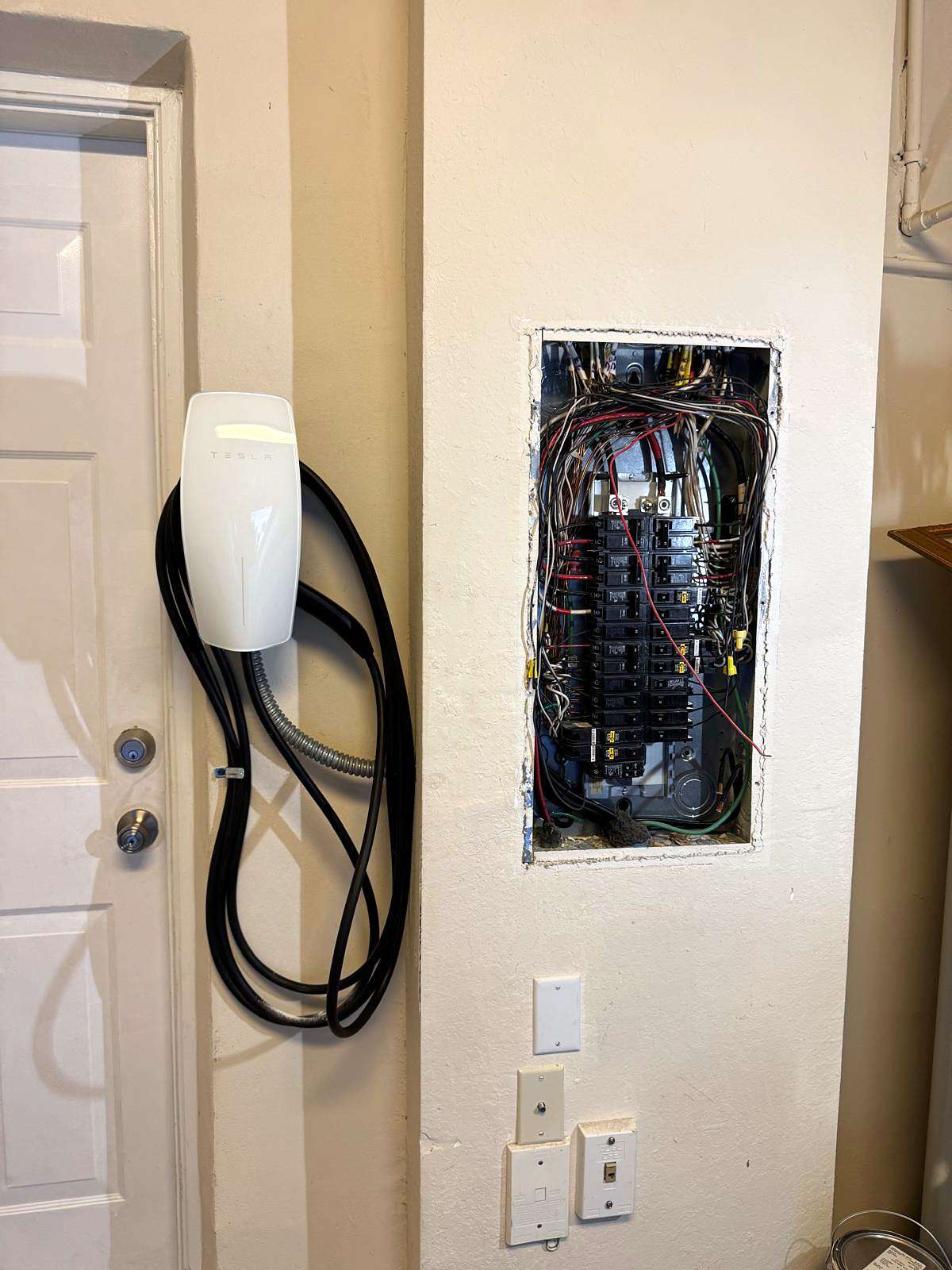
Your panel. An EV charger is a continuous load. Code requires the circuit to be sized at 125% of the charger’s rated current, so a 48 amp charger needs a 60 amp circuit and a 40 amp charger needs a 50 amp circuit. Before we add that, we run a load calculation on your home. Many panels have room. Some do not, especially in older homes or homes that already run a pool, a big kitchen and a home office. If yours is tight, see your options below.
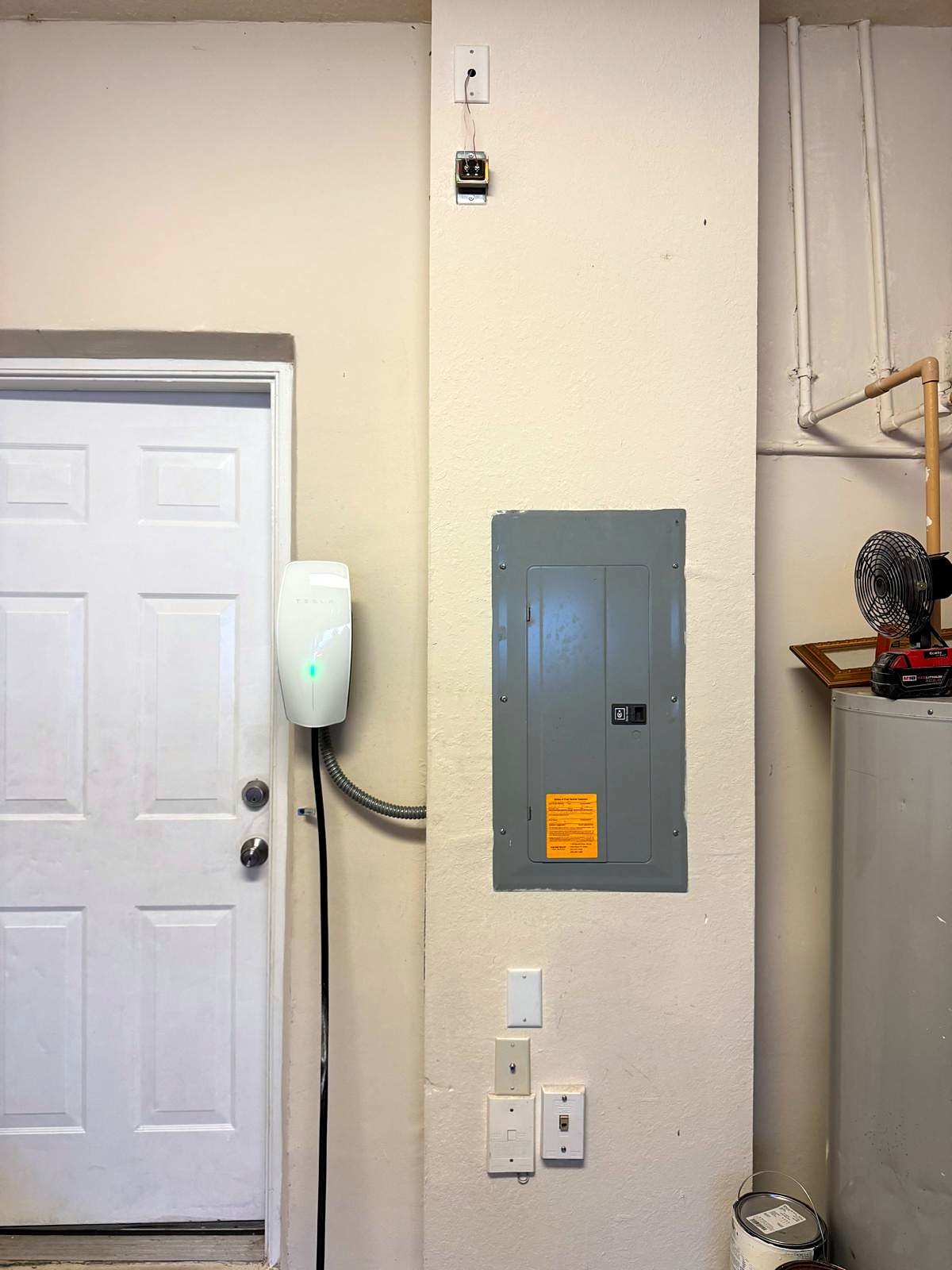
The route. Most South Florida homes are concrete block. Getting from the panel to the garage or driveway takes planning: through the attic, along the garage wall, or in conduit on the exterior. We choose the route that is safe, protected and looks clean.
The location. A garage install is the simplest. Outdoor chargers need an enclosure rated for weather, and near the beach or the Intracoastal we choose fittings and hardware that resist salt air.
When the panel is too small
You have choices, and we will lay them out plainly:
- Set the charger lower. Many chargers can be limited to a smaller current. You charge more slowly, which is often still plenty overnight.
- Add load management. Some chargers and add-on devices watch your home’s total load and slow charging when the house is busy.
- Upgrade the panel or service. If you are planning other big loads too, a panel upgrade may be the right long term answer.
Condos, townhomes and HOAs
If you live in a condo or an HOA community, talk to the association first. They usually have rules about where equipment can go, how it is metered and who can work on common property. Florida law generally allows condo owners to install a charger at their own assigned space, subject to the association’s reasonable requirements. We plan the install around what your association asks for.
What to expect
A new 240 volt circuit in Florida is permitted work, inspected by your local building department. On install day we run the circuit, mount the charger, set its current limit to match the breaker and test it. We show you the breaker that serves it and how the charger reports a fault.
For more detail before you buy, read our guide to Level 2 home charging in South Florida.
Why Reef
We are a licensed and insured family business. Ryan Bye has 26 years in the trade and runs Reef with his father, Richard. All of our work is guaranteed, and seniors and military get 15% off. Request service or call the number for your county to get your charger in.