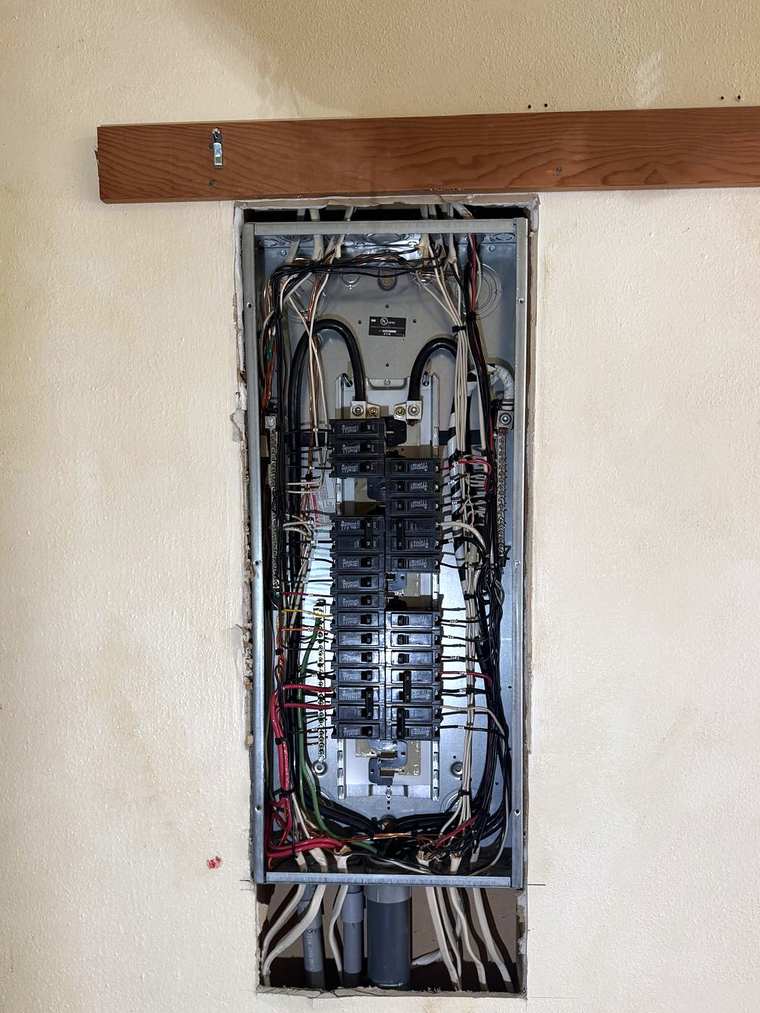
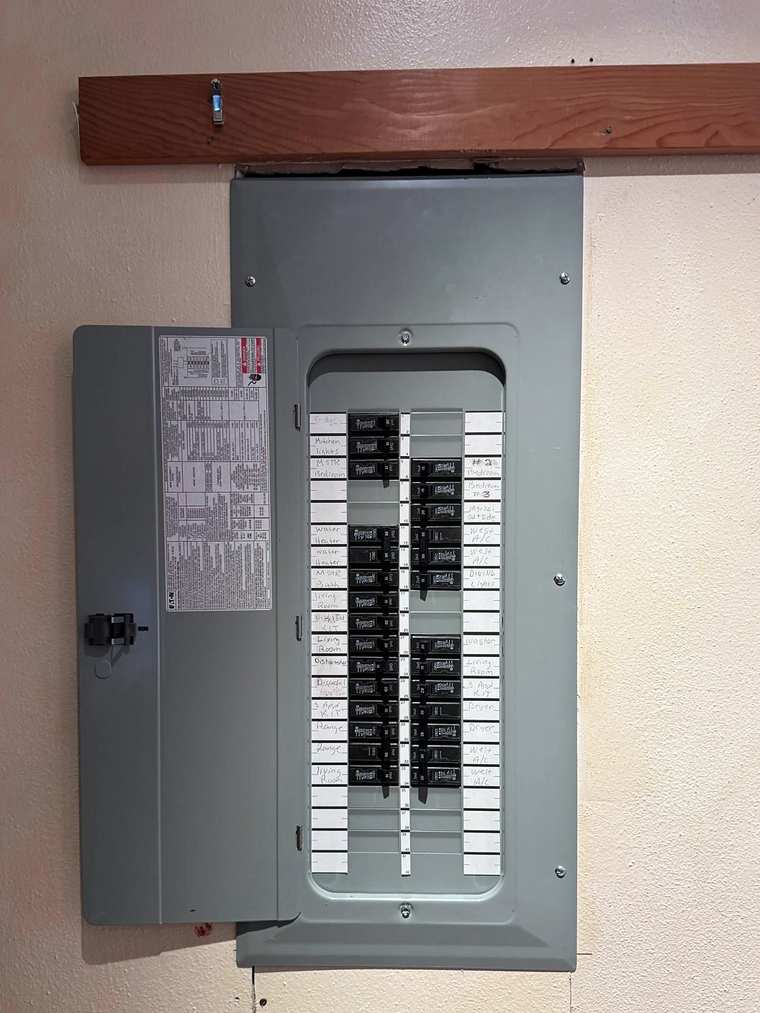
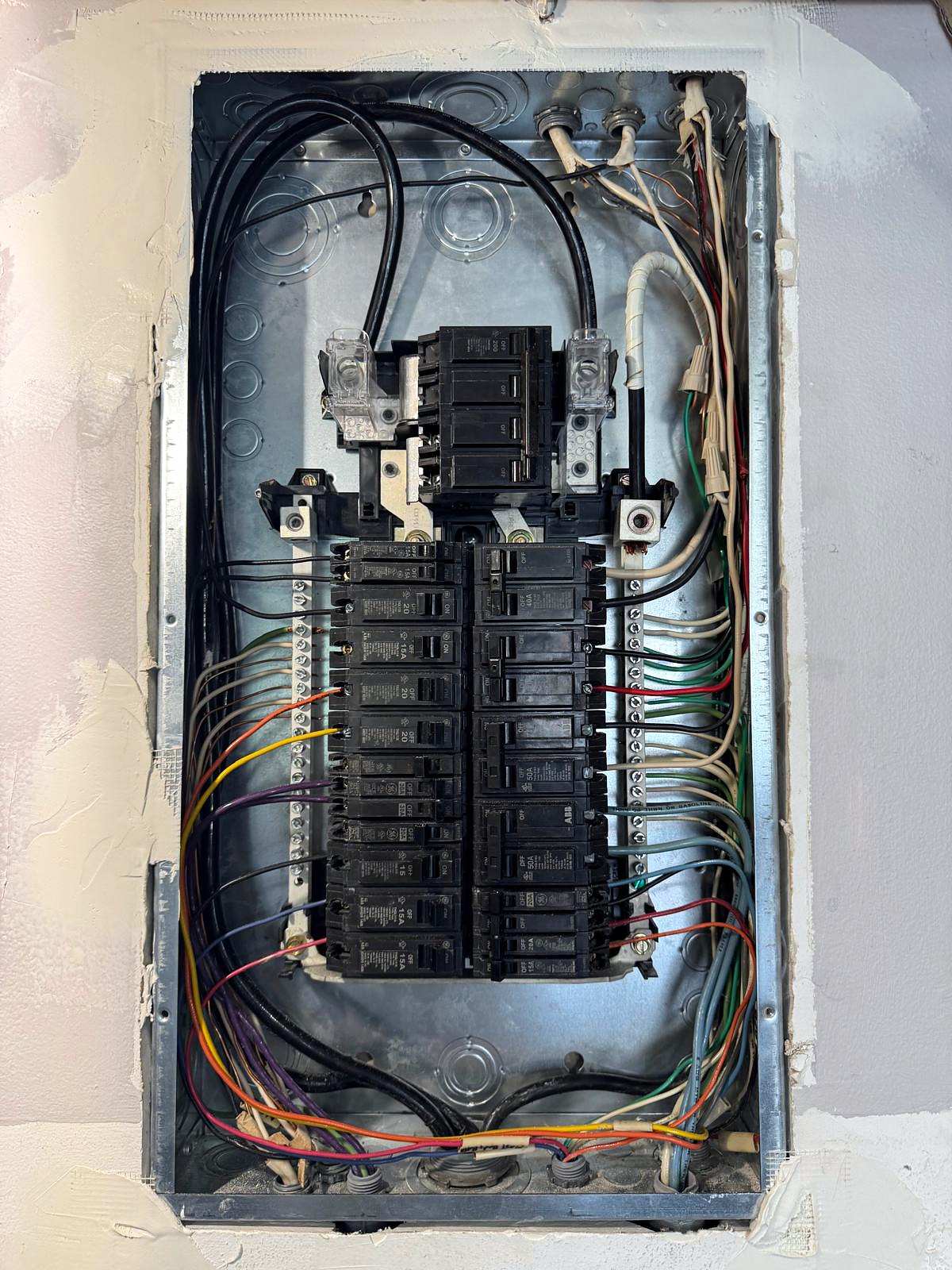
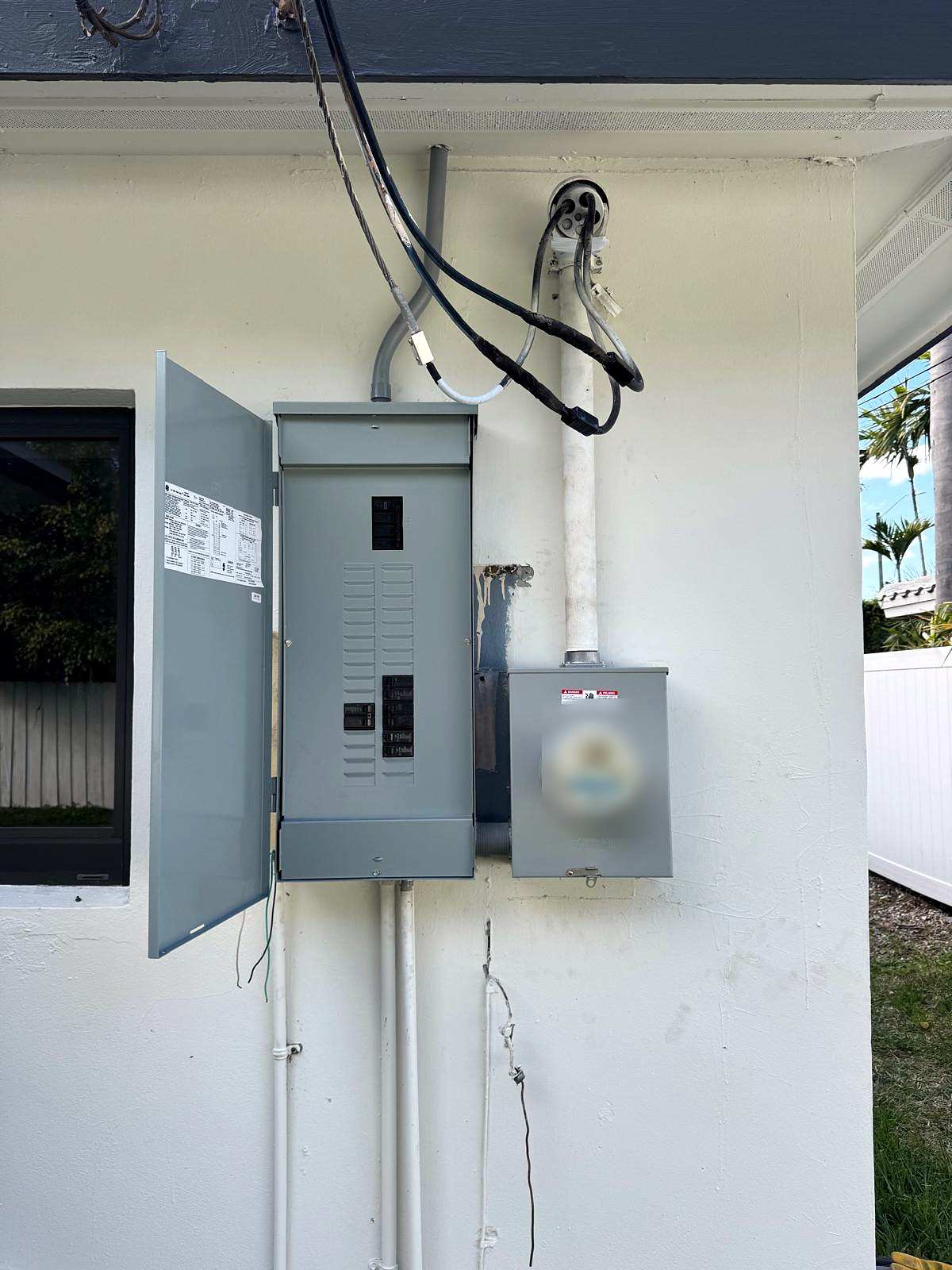
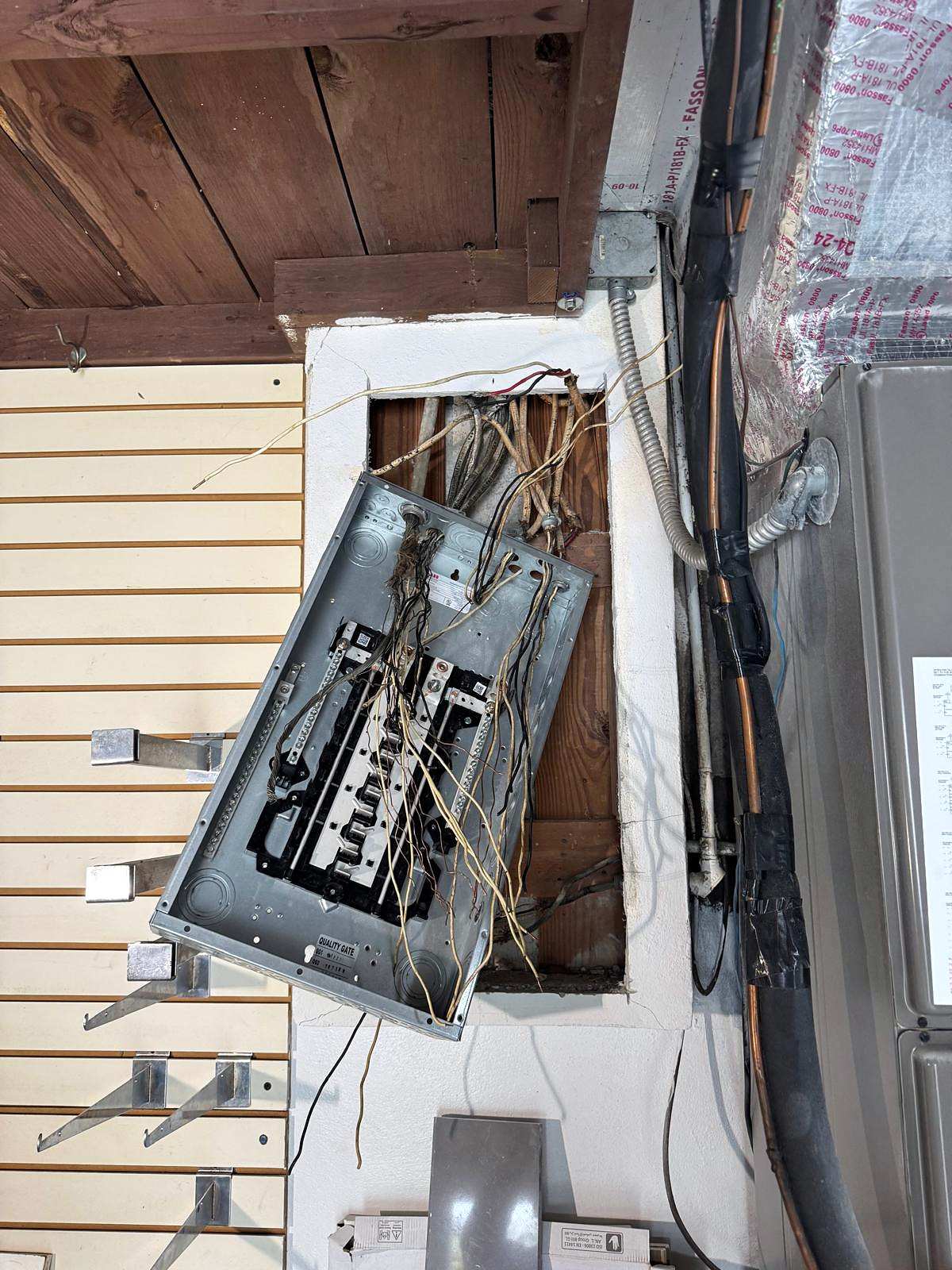
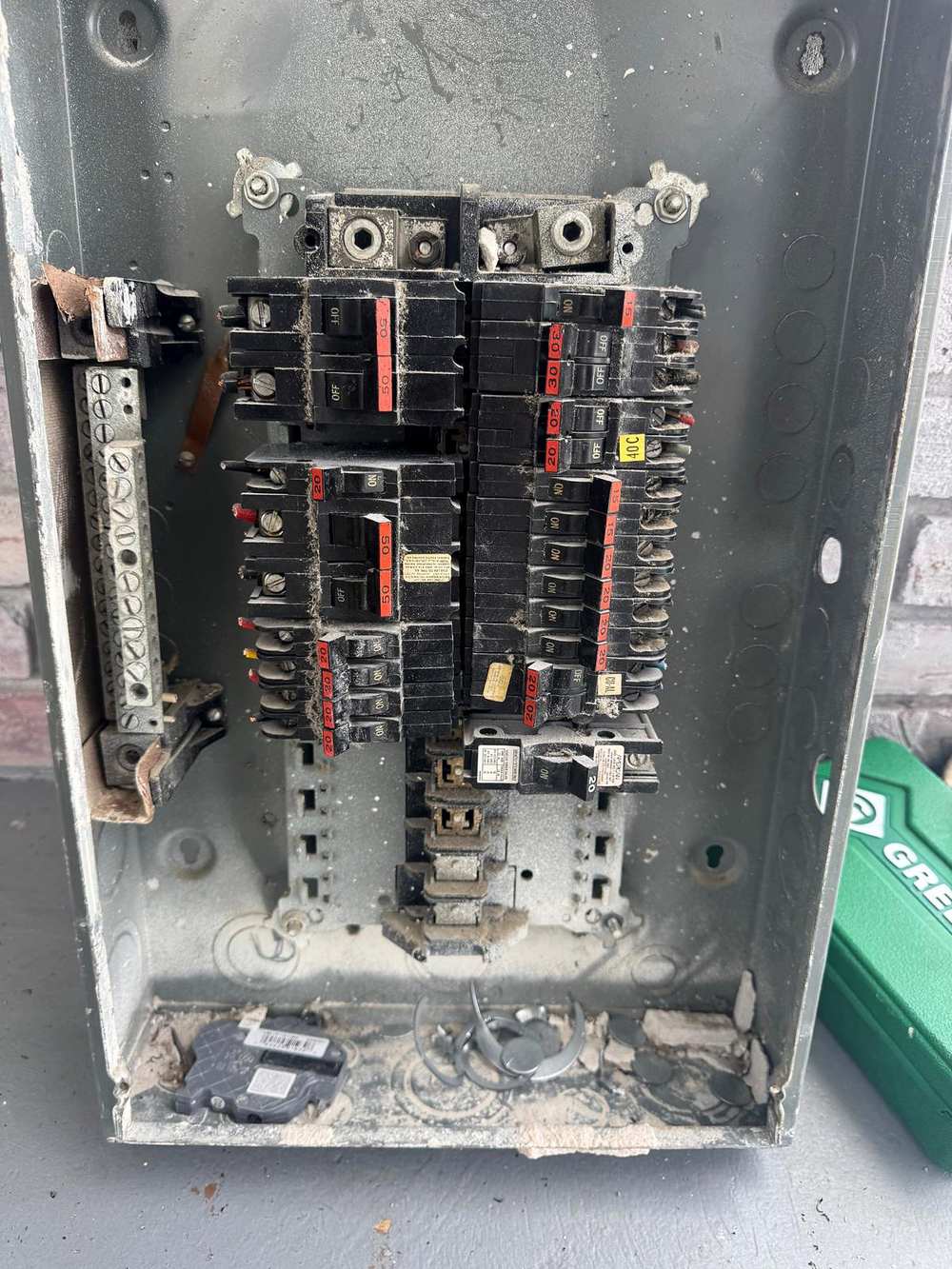
What a panel upgrade involves
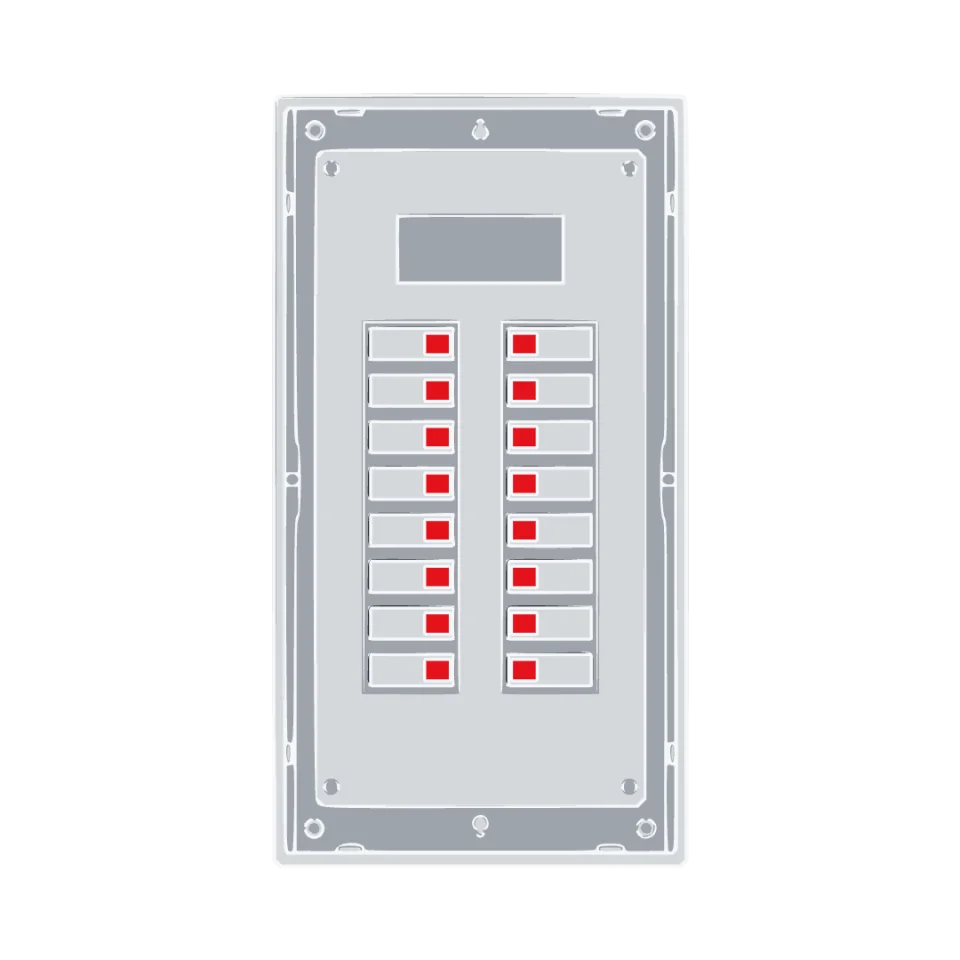
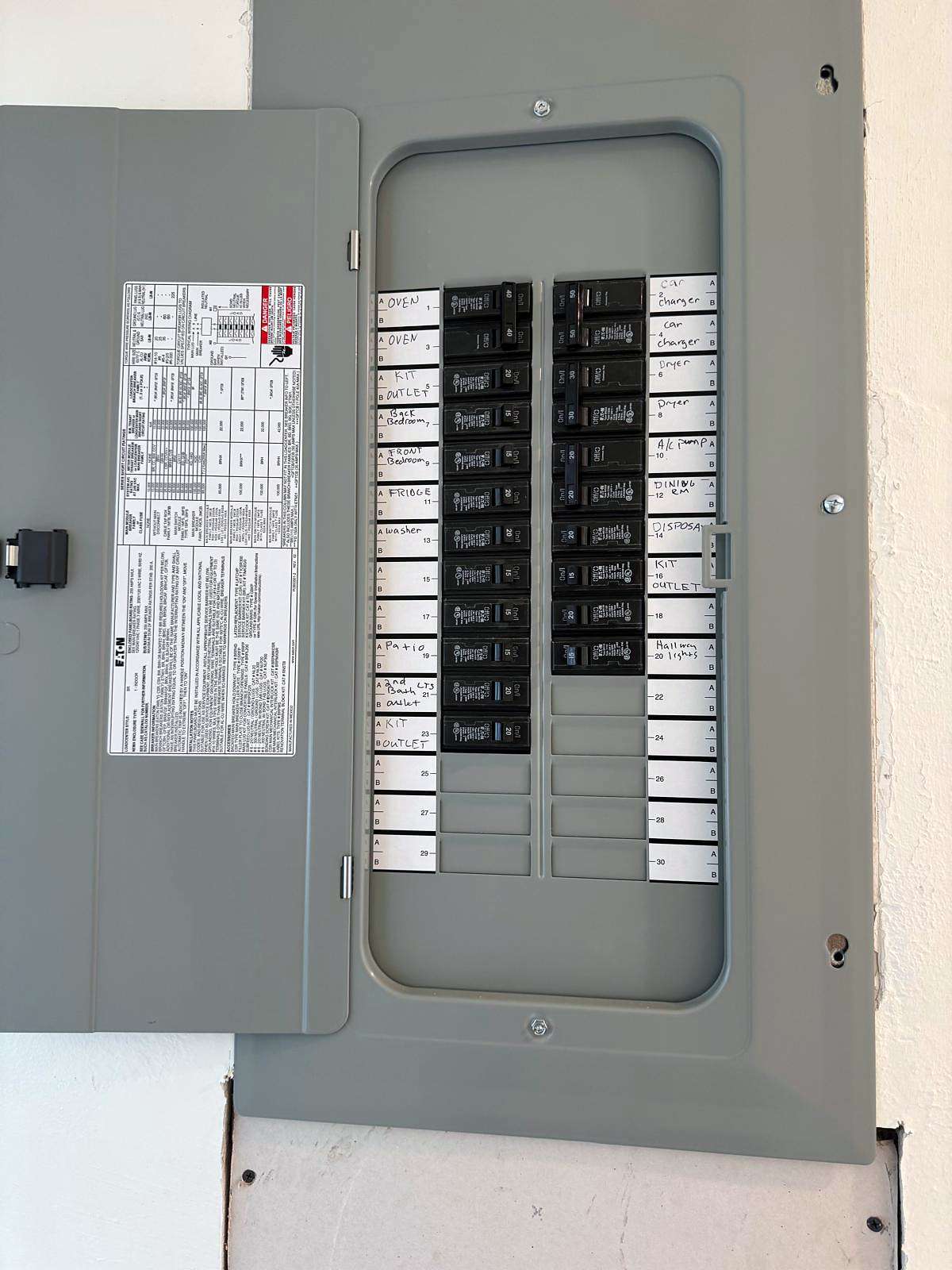
Your electrical panel is where power from the utility gets split into the circuits that run your home. Each breaker protects one circuit. When a breaker sees more current than its wire can safely carry, or a short, it is supposed to trip and cut power before that wire overheats.
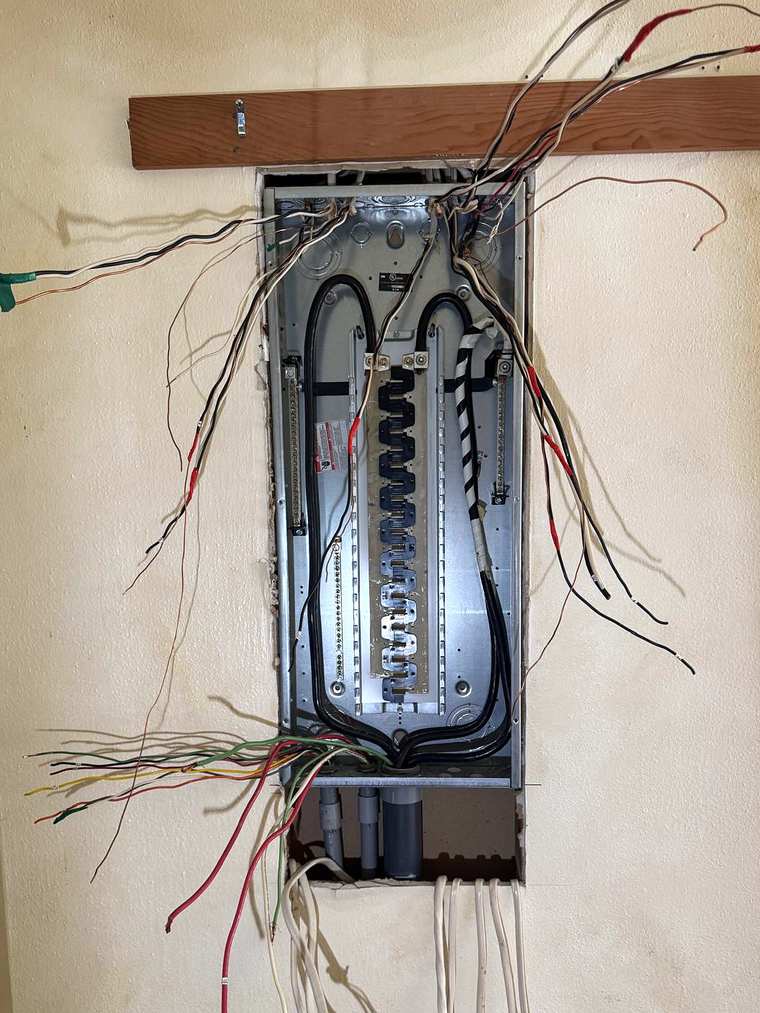
“Panel upgrade” covers two different jobs. A panel replacement swaps the old panel and breakers for new ones at the same capacity. A service upgrade raises the capacity of the whole system, for example from 100 amps to 200 amps, which can also mean a new meter base and new service conductors. We tell you which one your home needs, and why.
Signs your panel needs attention
- Breakers that trip often, or trip again right after you reset them
- A panel cover or breakers that feel warm, or a buzzing or crackling sound
- Scorch marks, melted plastic or a burning smell near the panel
- Lights that dim or flicker when a large appliance starts
- Fuses instead of breakers
- Rust or corrosion on the panel or the meter can, common near the coast
- No open spaces left, or two wires under one breaker screw
- A Federal Pacific Stab-Lok or Zinsco panel
- An insurance company asking for a replacement after a 4-point inspection
If you smell burning or see scorching, turn off the main breaker only if you can reach it safely, keep away from the panel and call us. That is an emergency, and we answer 24/7.
What we find in South Florida homes
Many homes in Palm Beach and Broward were wired when nobody planned for an EV in the garage, a pool pump, a home office and a kitchen full of appliances. Older homes in established neighborhoods across both counties often still carry their original panels, and some still run on fuses.
Salt air is the other problem. Exterior panels and meter cans near the Intracoastal and the beach rust from the outside in, and moisture works its way to the breakers and the bus. A panel can look fine from the front and still be corroded where it matters.
Then there are the brands with a bad reputation. Federal Pacific Stab-Lok and Zinsco panels are still found in homes across the region. Both have documented concerns about breakers that may not trip. Many Florida insurers flag them, and some will not write or renew a policy until the panel is replaced. Our guide to Federal Pacific and Zinsco panels explains the details.
Sizing it right
We do not guess at panel size. A load calculation adds up what your home actually draws: lighting, appliances, an electric water heater, pool equipment, and anything you plan to add, like a Level 2 EV charger. That number decides whether a replacement at your current size is enough or the service should go up.
Oversizing costs you money you did not need to spend. Undersizing puts you right back where you started the day the next big load arrives. The calculation is how we avoid both.
What to expect on the day
A panel cannot be changed with the power on, so your home will be without electricity for part of the day. We tell you ahead of time so you can plan: charge phones and laptops, keep the refrigerator closed, and work from somewhere else if you need to.
Panel and service work in Florida is permitted work, inspected by your city or county building department. When the service size changes, the utility (FPL for most of our area) has to disconnect and reconnect power, and that is part of the schedule.
When we finish, every breaker is matched to the wire it protects, connections are torqued to the manufacturer’s spec, grounding and bonding are corrected where needed, and the directory is labeled so you can find the right breaker in the dark. We walk you through the new panel before we leave.
A family electrician you can call again
Reef Electrical is a family business. Ryan Bye has 26 years in the trade, and he runs the company with his father, Richard. We are licensed and insured, all of our work is guaranteed, and seniors and military get 15% off. If your panel is showing any of the signs above, request service or call the number for your county.