Federal Pacific and Zinsco panels explained
Two panel brands come up again and again in older South Florida homes and on 4-point inspections. How to identify them, what the concerns are, and what to do next.
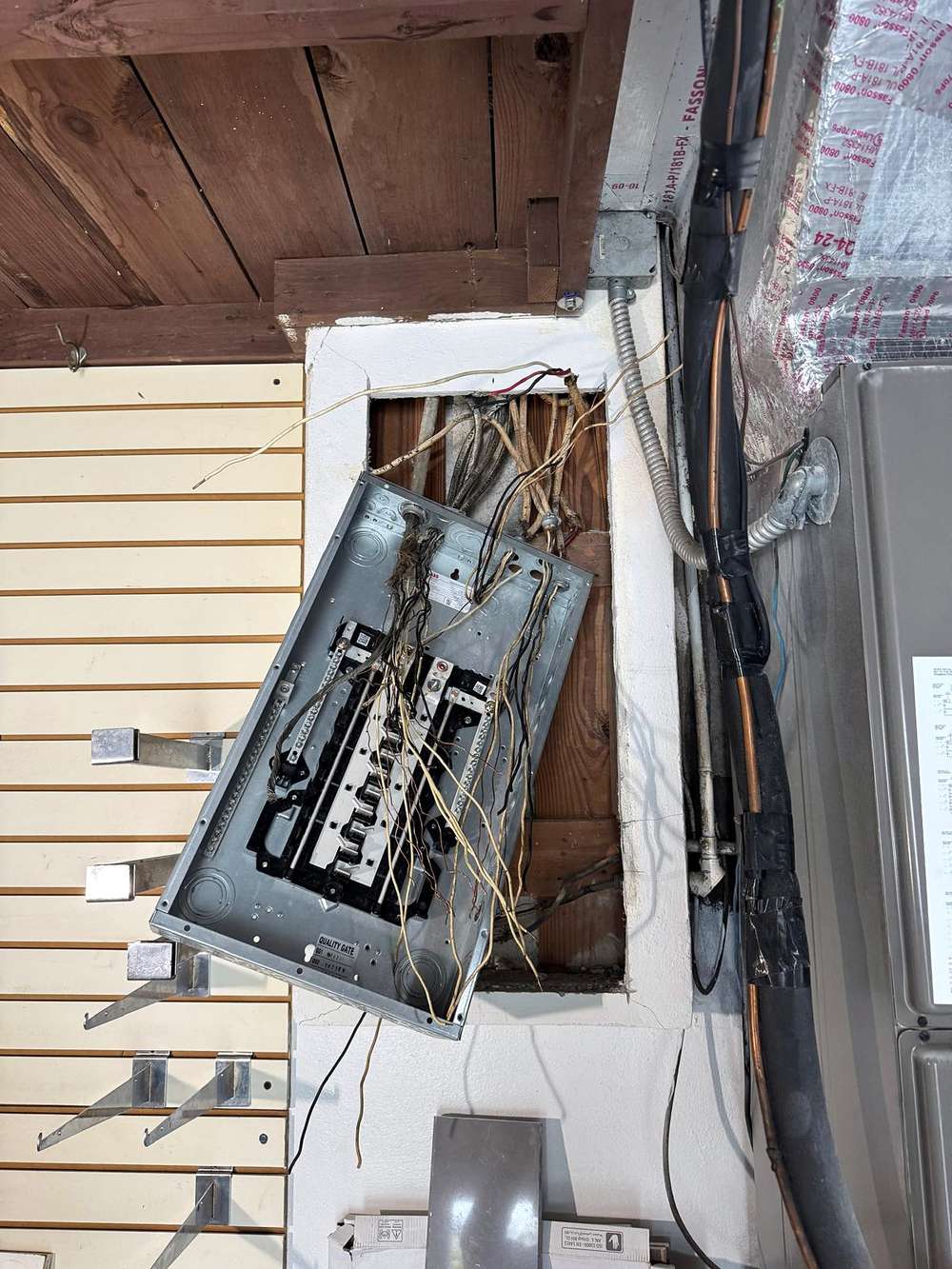
Two panel brands come up most in older South Florida homes: Federal Pacific Electric and Zinsco. Both were common from roughly the 1950s into the 1980s, when much of Broward and Palm Beach counties was built.
How to tell what you have
You can check yourself. Open the panel door and find the label, usually inside the door or on the inner cover. Leave the inner cover on. The parts behind it are live.
Federal Pacific Electric (FPE). Look for “Federal Pacific Electric,” “FPE,” or “Stab-Lok” on the label or breakers. Stab-Lok is the breaker design behind the concern.
Zinsco. Look for “Zinsco” on the label. Some were also sold as Sylvania or GTE-Sylvania. Many Zinsco breakers have thin handles in a mix of colors.
Label missing, painted over or unreadable? Photograph the breakers and let an electrician identify it.
The concern with Federal Pacific Stab-Lok breakers
The longstanding concern is that some Stab-Lok breakers may fail to trip on an overload or short, before the wire overheats. There have also been concerns about how firmly some grip the bus bar inside the panel. A loose connection there can overheat.
The U.S. Consumer Product Safety Commission investigated FPE breakers in the 1980s and closed the case without a formal recall, citing insufficient data. Independent testing since then has raised further concerns about how some perform.
The concern with Zinsco panels
Zinsco breakers attach to an aluminum bus bar. Over time the connection can loosen, and a loose connection arcs and heats up. Sometimes the breaker can fuse, or weld itself, to the bus bar. It may then fail to trip on an overload, or to cut power even when switched OFF.
Signs we look for: melted or discolored breakers, scorch marks around them, and loose breakers.
Why your insurer cares
Many Florida insurers ask for a 4-point inspection on older homes. Its electrical section records the panel brand, and many flag Federal Pacific and Zinsco. Some carriers will not write or renew a policy until the panel is replaced. Others may accept it with conditions. Rules vary by company and over time, so get your insurer’s requirements in writing first.
Selling? Expect the buyer’s home inspector to call these panels out and the buyer’s insurer to ask too.
Not every old panel is a problem
Age alone does not condemn a panel. Many older panels from other manufacturers remain serviceable if sized for the home, free of corrosion and damage, and in good working order. A Federal Pacific or Zinsco label is a strong reason to have yours inspected.
Repair or replace?
Replacement breakers made for these panels exist. But new breakers do not address concerns about the bus bar and their connection to it, and may not satisfy an insurer. After 26 years in the trade, we usually recommend replacing the panel rather than its parts.
Planning an EV charger, new pool equipment or a kitchen remodel? It may make sense to size the new service for it. See our post on signs your panel needs an upgrade.
What a replacement involves
Every house is different. A typical replacement:
- Assessment. We check the panel and its wiring, service size, grounding and bonding, and the meter enclosure, and discuss your plans.
- Plan. Same size or larger service, panel location, and any corrections needed.
- Permit and inspection. In Florida, panel replacements typically require a permit and a local building department inspection. The utility may need to disconnect and reconnect service.
- The work. Expect the power off for part of the day. We move circuits to the new panel, clean up damaged wire ends and label every breaker.
- Testing. We check circuits before leaving and give you a panel directory you can actually read.
What you can do now
- Have one of these brands? Ask your insurance agent what they need.
- Keep the area in front of the panel clear for quick access.
- Watch for breakers that trip often, a warm panel door, buzzing, a burning smell, or flickering lights.
Do not remove the inner cover, swap breakers yourself, or keep resetting a breaker that keeps tripping.
When to call right away
A burning smell, heat at the panel, buzzing or crackling, scorch marks, or sparks are emergencies. If you can safely reach the main breaker without standing in water, switch it off, then call. Reef Electrical offers 24/7 emergency service. For smoke or flames, get everyone out and call 911.
For everything else, request service or read about our panel upgrades. We are family owned, licensed and insured, all our work is guaranteed, and seniors and military get 15% off.