Signs your electrical panel needs an upgrade
Breakers that keep tripping, a panel that feels warm, rust from salt air, or big plans like an EV charger. How to tell when your panel has reached its limit.
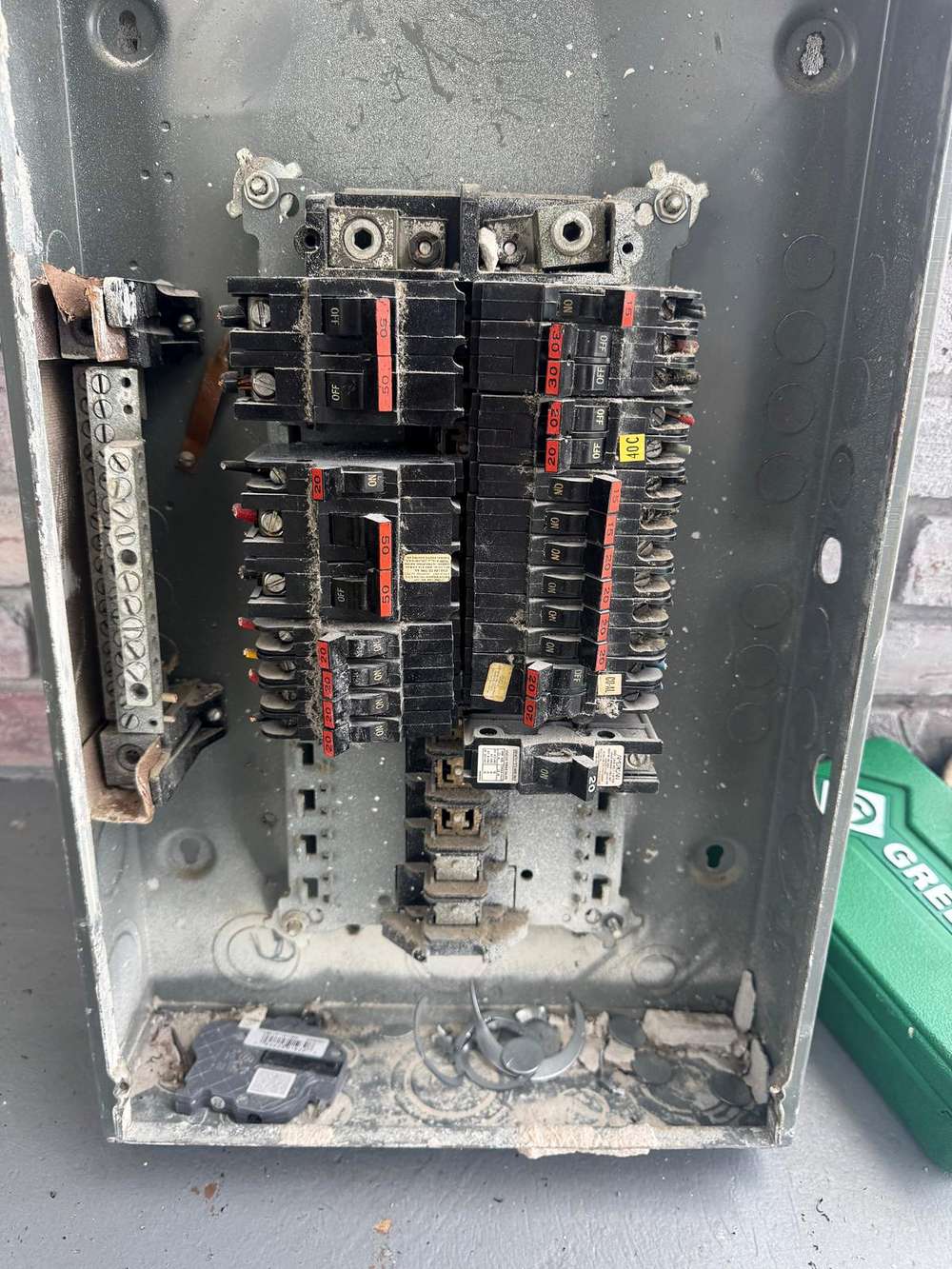
Your panel splits utility power into circuits and protects each one with a breaker (or, in some older homes, a fuse). An undersized, worn out or problem brand panel causes small annoyances first and real hazards later. In this part of Florida we see every age and condition: 1960s block homes, coastal condos, newer houses with every space already used.
Breakers that keep tripping
One trip from a hair dryer and a curling iron on the same bathroom circuit is the breaker doing its job. Repeated trips, or trips with nothing unusual running, suggest an overloaded circuit, a failing breaker, a short or a ground fault.
Reset it once: push the handle firmly to OFF, then ON. If it trips again right away, leave it off and call an electrician. Never hold it on, tape it or swap in a bigger breaker, which removes the wire’s protection from overheating.
Warmth, buzzing or a burnt smell
The panel door should feel no warmer than the wall. Warmth you feel with the back of your hand, a steady buzz or crackle, or a hot plastic smell points to a loose connection or a breaker arcing inside. That heat damages the breaker and its bus bar.
Do not open the inner cover. Keep people away. If you can reach the main breaker without standing in water or touching a hot surface, switch it off, then call our 24/7 emergency service. For smoke or flames, get out and call 911.
Scorch marks, melted breakers and rust
With the door open and the inner cover on, check the breakers. Brown or black marks around a breaker, a handle that looks melted or a loose breaker mean the panel needs a check.
In South Florida, salt air travels well inland and rusts panels on exterior walls, in garages and near the water. Enclosure rust starts as cosmetic, but corrosion inside reaches the bus bar and breaker connections, which then run hot. Rust streaks or water stains running down from the top of an outdoor panel can mean water is entering around the service mast or a failed seal.
Lights that dim when something big starts
A brief, slight dip when a large motor starts can be normal. Noticeable dimming whenever the dryer, pool pump or microwave kicks on, or flicker on its own, can mean an overloaded service, a loose neutral or a meter or service connection problem. A loose neutral, which makes lights flare bright then dim and can damage electronics, is urgent. An electrician can tell whether the problem is yours or the utility’s.
Fuses, full panels and double taps
- Fuses. Screw-in fuses were designed for a much smaller household load.
- No room left. A panel packed with tandem breakers or circuits squeezed in wherever they fit was outgrown long ago.
- Double taps. Two wires under a breaker screw rated for one, a common inspection finding, can loosen and overheat.
Problem panel brands
Some panels carry a long record of concerns, however clean they look. In older South Florida homes we most often find Federal Pacific Electric panels with Stab-Lok breakers, and Zinsco panels. How to identify them and what to do next: Federal Pacific and Zinsco panels explained.
Your plans can outgrow your panel
Even a healthy panel can fall short of what you plan to add:
- A Level 2 EV charger, which needs its own 240 volt circuit and runs for hours
- New pool or spa equipment
- A kitchen remodel with an electric or induction range, double ovens or more appliance circuits
- An addition, converted garage or in-law suite
- An electric tankless water heater, which can need very large circuits
Older 60 amp and 100 amp services were wired for far fewer appliances. A load calculation following the National Electrical Code shows whether your service can carry the new load or you need a larger service, a new panel or a load management device. More on EV chargers: Level 2 EV charger at home in South Florida.
When your insurer brings it up
Many Florida homeowners first hear about their panel from an insurer. On older homes, insurers often ask for a 4-point inspection, whose electrical section checks panel brand, service size, fuses and visible hazards like double taps or scorching. Some carriers will not write or renew a policy until certain items are fixed. Requirements vary by company, so get your agent’s exact list in writing before scheduling work.
Repair, replace, or upgrade the service
A single bad breaker or loose connection can often be repaired. When the panel itself is the problem, there are two main paths:
- Panel replacement. A new panel at the same service size, common for problem brands, corrosion or damage.
- Service upgrade. A larger service, such as 100 to 200 amps, which can involve the meter enclosure, service conductors and the utility’s connection.
Either way, expect the power off for part of the day. In Florida, both typically require a permit and an inspection by your local building department, and the utility may need to disconnect and reconnect your service.
What you can safely do, and what to leave alone
Besides looking, listening, smelling and one reset, you can label circuits as you learn them and note what tripped and what was running, to speed up diagnosis.
Leave the rest to a licensed electrician: removing the inner cover (the dead front), replacing breakers, adding circuits, and anything involving the main breaker, meter or service mast. Parts behind the inner cover stay energized even with the main breaker off, because the utility’s incoming wires are always live.
When to call us
Call right away for heat, burning smells, buzzing, scorch marks or sparks. Call soon for the other signs above or an insurance request. Call before buying an EV charger or starting a remodel, so the panel is in the plan from day one. You can request service online or read about our panel upgrades. Reef Electrical is family owned, licensed and insured, all our work is guaranteed, and seniors and military get 15% off.