A Level 2 EV charger at home in South Florida: what to know first
Before you buy a charger, check three things: the circuit it needs, whether your panel can carry it, and where it will live. A plain guide for South Florida homes.
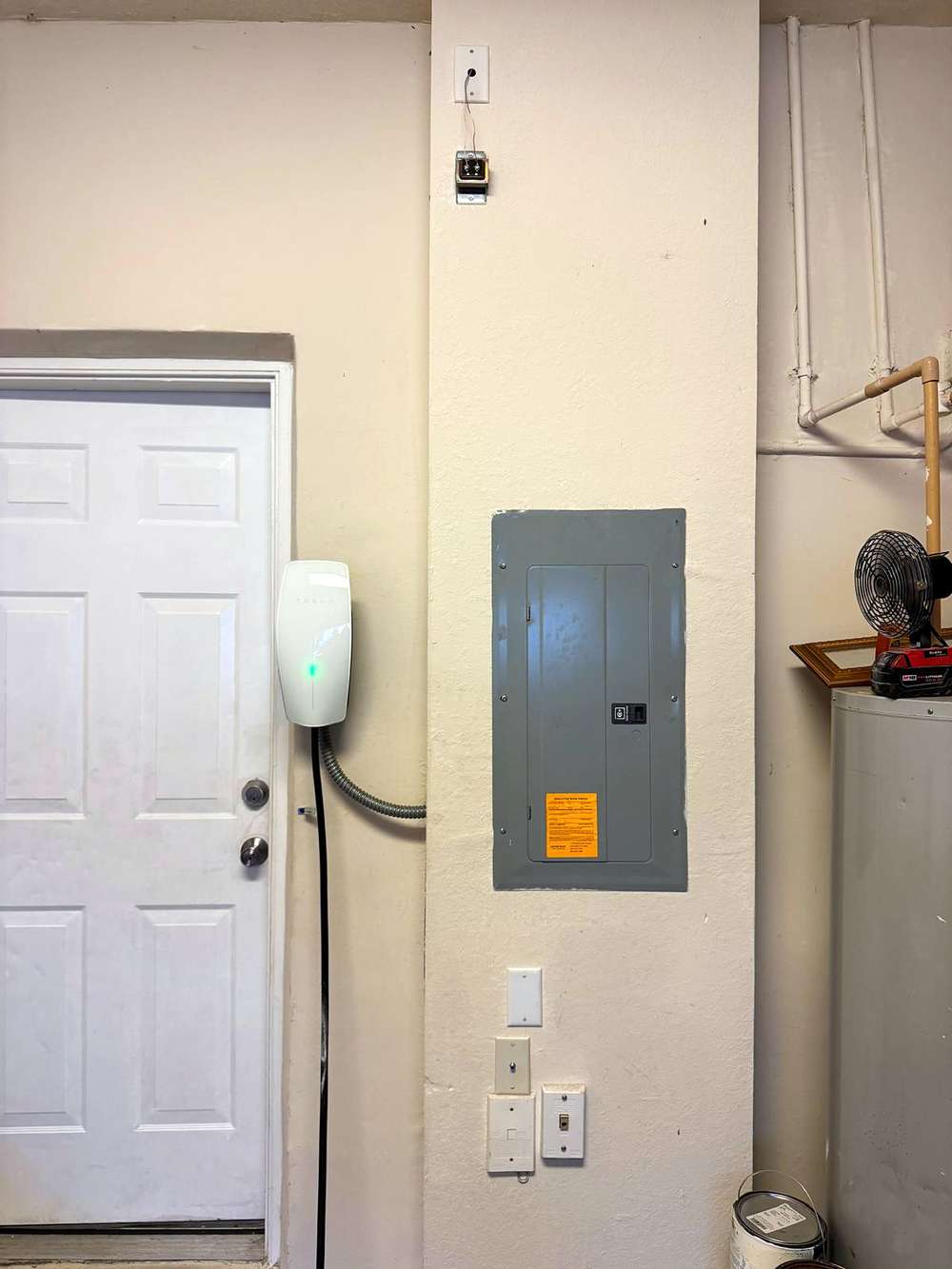
The charger is the easy part. The real questions are electrical: the circuit, your panel and where the charger mounts.
Level 1 or Level 2
Every EV can charge from a regular 120 volt outlet. That is Level 1: a few miles of range per hour, fine for a short commute but too slow for most drivers, homes with two EVs or regular I-95 drives.
Level 2 uses a dedicated 240 volt circuit, like an electric dryer or range. It is several times faster and refills a normal day of driving overnight for most people. Your car’s built in charger caps the rate, and a wall unit rated higher will not charge faster. Check that limit before choosing a charger and circuit.
Plug-in or hardwired
- Plug-in, usually into a NEMA 14-50 receptacle like many ranges and RVs use. Easy to take along when you move or swap units.
- Hardwired to the circuit. No receptacle to wear out, and it allows the higher current settings many wall units offer.
Months of plugging and unplugging under a long, steady load can loosen and overheat an economy grade receptacle, so use a heavy duty, industrial grade one. Current code generally requires GFCI protection for EV charger receptacles, and many chargers have built in ground fault protection. The two sometimes clash, causing nuisance trips. Hardwiring avoids both, so we often recommend it for chargers that stay put.
Sizing the circuit: the 125 percent rule
Code treats EV charging as a continuous load, so the circuit must be rated for at least 125 percent of the charger’s draw:
- 48 amp setting: 60 amp circuit.
- 40 amp setting: 50 amp circuit.
- 32 amp setting: 40 amp circuit.
Most wall chargers can be set lower at installation, to what your panel and car can use, which may be below the box maximum. Wire size follows circuit size and run length, so a charger far from the panel may need heavier wire to limit voltage drop.
Can your panel handle it?
A load calculation adds up the range, dryer, water heater, pool equipment and everything else on the panel to see what is left:
- Plenty of capacity. We run the circuit and install the charger.
- Room for a lower setting. 32 or 40 amps still covers overnight charging.
- Not enough capacity. A load management device that slows or pauses charging when the home’s total demand peaks, or a panel or service upgrade.
- No space, or a problem panel. A full panel or a brand insurers flag comes first. See Federal Pacific and Zinsco panels explained.
Homes on 100 amp service with an electric range, dryer and water heater most often need us to weigh options. Older 60 amp services usually need an upgrade before Level 2.
South Florida details
Garage heat. Summer garages here get very hot. Check the charger’s rated operating temperature, avoid direct sun through the garage door and leave space around it.
Outdoor installs. Exterior walls and carports need an outdoor rated unit and weatherproof connections. Near the coast, salt air eats cheap hardware fast, so use corrosion resistant fittings and mounting hardware and keep the unit out of sprinkler spray.
Water. Where a driveway or garage takes on water in heavy rain, follow the manufacturer’s mounting height and keep the charger and any receptacle well above the highest water you have seen.
Hurricane season. Before a storm, unplug a portable charger and store the cable off the floor. After a garage flood, have the circuit checked before charging. Our hurricane season checklist covers the rest of the house.
Condos, townhomes and HOAs
Florida condominium law generally lets unit owners install a charger in their assigned parking space, subject to association rules on who pays for installation and electricity, insurance and use of a licensed contractor. High rise jobs often involve the electrical room and a long garage run, so the association and its engineer may be involved. Get the board’s requirements in writing before buying hardware.
Single family HOAs may require architectural approval for an exterior mounted charger. Ask first, then install.
Permits and inspection
In Florida, a 240 volt EV charger circuit typically needs a permit and an inspection by the local building department. Your city or county sets the specifics.
How we approach an install
- Look first. Your panel, your car’s charging limit, where you park and the route from the panel to the charger.
- Calculate and recommend. The load calculation, then a clear recommendation: charger setting, circuit size, plug-in or hardwired, and route.
- Install and test. We run the circuit, mount and connect the charger, and test it with your car.
- Walk you through it. We show you where to schedule overnight charging, which most chargers and cars allow.
What you can do yourself, and what you should not
To speed up our first conversation, check your car’s maximum Level 2 rate, pick your charging spot and photograph your panel label and main breaker.
Do not install a 240 volt circuit or 14-50 receptacle yourself, plug a Level 2 charger into a dryer receptacle with an adapter, or run any charger on an extension cord. Dryer receptacles usually sit on smaller circuits never meant for hours of car charging.
Stop charging and call an electrician if a plug or receptacle feels warm or looks discolored, a breaker trips during charging, or you smell burning.
Ready to plan it
Read about our EV charger installation or request service, and we will look at your setup and give you a straight answer. Reef Electrical is family owned, licensed and insured, and all of our work is guaranteed.